Do you want to work in hospitals, nursing homes, or healthcare service centers at home? You should search for CNA Programs near Me in El Centro and other near metropolises. CNA is the acronym for pukka Nursing Assistant and it’s a type of entry- position healthcare profile. similar professionals help cases by furnishing introductory care and helping them in their diurnal lives.
In utmost cases, nursing sidekicks act as caregivers for cases and they work under the guidance of certified nursers. still, working as a nursing adjunct requires obligatory instrument. For this, you should look for good institutes offering the pukka Nursing Assistant( CNA) Program in El Centro.
The Class of the Nursing Assistant Program
The class of the nanny Assistant Training Program( NATP) in El Centro exhaustively trains the scholars with the approved 60 hours of didactics or proposition. It also offers campaigners about 100 hours of hands- on clinical chops handed in combined inpatient. Good institutes are well apprehensive that entry- position positions need professed nursing installations to make competent pukka nursing sidekicks.
Hence, the preceptors always intend to deliver quality nursing adjunct- related knowledge and the necessary clinical chops to work as certified nursing sidekicks in numerous healthcare installations and conventions. A many campaigners also choose to give in out- of- sanitarium and home health locales after they complete Nursing Assistant Certification in El Centro.
Tasks to Learn to Complete Nursing Assistant Programs individualities who want to work as CNAs have to complete their high academy parchment from a reputed Nursing Assistant School in El Centro. contemporaneously, applicants should learn to perform a many of the essential tasks to complete their instrument.
Assurance of the safety and good health of cases Check vital signs and symptoms Transfer of cases safely furnishing proper care to achieve particular hygiene of the cases
also, depending on the underpinning situation and medical installation setting, one has to administer CPR treatment to cases.
Job Scopes and Salary Hikes of Nursing sidekicks
According to the Labor Statistics Bureau in the United States, the median periodic pay envelope of a nursing adjunct is about$,800. CNA is one of the largely demanding jobs and its demand will further increase in the future. The Bureau further reveals that the demand will increase by about 8 percent up to 2030
CNA Programs A common reason behind the increase in employment openings for pukka nursing sidekicks is the expanding population of the senior, as they need to calculate on sidekicks. campaigners willing to work as CNAs after completing their program only have to search for CNA Jobs near Me in El Centro or other girding areas.
How Nursing sidekicks are different from Medical sidekicks
places played by pukka nursing sidekicks are different from medical sidekicks. Medical sidekicks perform both clinical and executive tasks. still, nursing sidekicks remain directly involved in minding for cases. thus, working as pukka Nursing Assistant is an excellent entry point to the nursing profession. It gives exposure to colorful nursing- related tasks and gives hands- on and practical experience to work in medical care.
SOCAL NURSING ACADEMY OFFICE 73700 Dinah Shore Drive, Suite 107, Palm Desert, CA 92211 1-760-332-8083 socalnursingacademy@gmail.com
Information Technology (IT) is the use of computers, software, and networking devices to manage, store, process, and transmit data. IT has been a rapidly evolving field, with new technologies emerging every year, leading to significant advancements in all industries.
The importance of IT cannot be overstated, as it has become an essential component of every business operation. In this article, we will discuss the latest trends in IT, how they are changing the industry, and how businesses can benefit from these developments.
Trends in IT
Information Technology (IT) is an ever-evolving field that continues to impact all aspects of modern society. With new advancements and innovations emerging every year, IT has become a crucial component of many industries, from healthcare and finance to retail and transportation. In this constantly changing landscape, it’s essential to stay up-to-date with the latest trends and developments to remain competitive and succeed in business.
Artificial Intelligence (AI) and Machine Learning (ML):
AI and ML are two of the most significant trends in IT. They allow businesses to automate tasks that were previously performed by humans, such as customer service, data analysis, and decision-making. AI and ML algorithms are continually evolving, and businesses that can harness their power can gain a significant competitive advantage.
Cloud Computing:
Cloud computing is another significant trend in IT. It enables businesses to store and access data and applications over the internet rather than on-premises. Cloud computing is cost-effective, scalable, and provides a high level of security. Many businesses are migrating to cloud computing to reduce IT costs, improve flexibility, and increase productivity.
Internet of Things (IoT):
IoT is the interconnected network of physical devices, vehicles, home appliances, and other items embedded with electronics, software, sensors, and network connectivity, enabling these objects to collect and exchange data. IoT is revolutionizing many industries, including manufacturing, healthcare, transportation, and retail. It is creating new opportunities for businesses to improve efficiency, reduce costs, and enhance customer experiences.
Blockchain:
Blockchain is a decentralized, digital ledger that records transactions in a secure and transparent manner. It has the potential to transform the way businesses operate by providing a secure and efficient way to verify and transfer digital assets. Blockchain technology is already being used in industries such as finance, supply chain management, and healthcare.
Cybersecurity:
As businesses increasingly rely on technology, the threat of cyberattacks has grown. Cybersecurity has become a critical concern for businesses of all sizes, as a single breach can cause significant damage to a company’s reputation, finances, and customer trust. Businesses need to invest in robust cybersecurity measures to protect themselves from these threats.
Benefits of IT for Businesses
Information Technology (IT) has revolutionized the way businesses operate, making tasks faster, more efficient, and more streamlined. From automating tasks to providing real-time data and analytics, IT has a significant impact on productivity, cost savings, and customer experiences. By adopting the latest IT trends and technologies, businesses can gain a competitive edge, reduce costs, and improve efficiency.
Improved Productivity:
IT has the potential to streamline business operations, automate tasks, and reduce the workload of employees. This can lead to increased productivity, allowing businesses to produce more with fewer resources.
IT can help businesses deliver better customer experiences by providing more personalized and efficient services. For example, businesses can use AI and ML to analyze customer data and provide recommendations tailored to their needs.
Cost Savings:
IT can reduce costs by automating tasks and streamlining processes. Cloud computing, in particular, can save businesses money on hardware, software, and maintenance costs.
Increased Efficiency:
IT can help businesses operate more efficiently by providing real-time data and analytics. This allows businesses to make informed decisions quickly, improve processes, and identify areas for improvement.
Competitive Advantage:
By adopting the latest IT trends, businesses can gain a competitive advantage. For example, businesses that use AI and ML to automate tasks can provide faster and more accurate services than their competitors.
Conclusion
IT has become an essential component of every business operation, and the latest trends in IT are changing the industry. Businesses that can harness the power of AI and ML, cloud computing, IoT, blockchain, and cybersecurity can gain a significant competitive advantage. IT can help businesses improve productivity, enhance customer experiences, reduce costs, increase efficiency, and gain a competitive advantage. As technology continues to evolve, businesses that stay up-to-date with the latest trends will be better positioned to.
JTAG, which stands for Joint Test Action Group, is a standard that defines a way to test and debug electronic circuits. It was created in the 1980s as a way to improve the testing and programming of printed circuit boards (PCBs) and has since become an essential tool for electronic design and manufacturing.
JTAGallows for the testing and programming of digital and analog circuits, including microprocessors, memory devices, and other digital and mixed-signal components. The standard defines a set of signals that are used to perform various operations on the circuit, such as reading and writing data, controlling the circuit’s state, and checking for faults.
The JTAG standard is implemented using a set of pins on the circuit, which are used to connect the circuit to a JTAG controller, also known as a JTAG probe. The JTAG controller is typically a specialized piece of hardware or software that is used to communicate with the circuit and perform the desired operations.
One of the key advantages of JTAG is that it allows for testing and programming of the circuit without the need for physical access to the individual components. This is
particularly useful for circuits that are located on PCBs that are difficult or impossible to access, such as those that are embedded in a larger system or are part of a complex network of interconnected components.
JTAG also provides a way to test and diagnose faults in a circuit. The standard includes a set of tests that can be performed on the circuit to check for various faults, such as short circuits, open circuits, and other common problems. These tests can be run at any time during the development or manufacturing process, allowing for rapid identification and correction of any issues.
In addition to testing and debugging, JTAG is also used for programming of devices. Many microcontrollers and other digital devices can be programmed using the JTAG standard, allowing for rapid and efficient programming of large numbers of devices.
Overall, JTAG is an essential tool for electronic design and manufacturing, providing a way to test and program circuits in a rapid and efficient manner. While it is a complex standard that requires specialized hardware and software, it is widely used and supported by many different vendors and manufacturers, making it an important part of the modern electronic design process.
JTAG Technology
JTAG is commonly referred to as boundary-scan and defined by the Institute of Electrical and Electronic Engineers (IEEE) 1149.1, which originally began as an integrated method for testing interconnects on printed circuit boards (PCBs) implemented at the integrated circuit (IC) level. As PCBs grew in complexity and density—a trend that continues today—limitations in the traditional test methods of in-circuit testers (ICTs) and bed of nails fixtures became evident. Packaging formats, specifically Ball Grid Array (BGA) and other fine pitch components, designed to meet ever-increasing physical space constraints, also led to a loss of physical access to signals.
These new technology developments led to dramatic increases in costs related to designing and building bed of nails fixtures; at the same time, circuit board test coverage also suffered. JTAG/boundary-scan presented an elegant solution to this problem: build functionality into the IC to assist in testing assembled electronic systems.
Today, JTAG is used for everything from testing interconnects and functionality on ICs to programming flash memory of systems deployed in the field and everything in-between. JTAG and its related standards have been and will continue to be extended to address additional challenges in electronic test and manufacturing, including test of 3D ICs and complex, hierarchical systems.
History of JTAG
In the 1980s, the Joint Test Action Group (JTAG) set out to develop a specification for boundary-scan testing that was standardized in 1990 as the IEEE Std. 1149.1-1990. A few years later in 1993, a new revision to the standard—1149.1a—was introduced to clarify, correct, and enhance the original specification. An additional supplement, 1149.1b, was published in 1994 to add Boundary-Scan Description Language (BSDL) to the standard, paving the way for fast, automated test development and spurring continuous adoption by major electronics producers all over the world. The lessons that were learned became formalized in an update to the core standard in 2001 and IEEE-1149.1-2001 was published.
As new applications of JTAG were discovered, new standards were developed to extend the capabilities of JTAG. Standards such as the IEEE-1149.5 module test and maintenance bus standard in 1995 and the IEEE-1149.4 standard for mixed-signal testing in 1999 were met with low adoption rates and are not widely used at present. The IEEE-1149.6 standard introduced in 2003, on the other hand, began with slow adoption but has since become standard in many ICs as the technology it addressed—high-speed, AC-coupled signals—became a common feature of electronic systems. IEEE-1149.7, published in 2009 to address the need for JTAG in low-pin-count systems, is now standard on many popular microcontrollers.
Additional standards have also been published to add specific test capabilities. In 2002, the IEEE-1532 standard for in-system configuration of programmable devices was released and is now a common feature of FPGAs and their supporting software systems. IEEE-1581 was developed in 2011 to provide a convenient method of testing interconnects of high-speed memories with slow-speed test vectors; a version of this capability is implemented in some DDR4 memory components. To address the new application of combined capacitive sensing and boundary-scan test, IEEE-1149.8.1 was published in 2012. The extensibility of JTAG has been proven time and again.
More recently, efforts have been made to standardize JTAG access to instruments embedded within ICs. The IEEE-1149.1 standard was updated once more in 2013 for some housekeeping and to add extensions to access these instruments. Just one year later, an alternative standard for accessing these instruments, IEEE-1687, was published. Looking to the future, industry activities to extend JTAG into 3D-IC testing, system-level testing, and high-speed testing are already underway, proving that the versatility and extensibility of JTAG is here to stay.
How Does JTAG Work?
The JTAG/boundary-scan test architecture was originally developed as a method to test interconnects between ICs mounted on a PCB without using physical test probes. Boundary-scan cells created using multiplexer and latch circuits are attached to each pin on the device. These cells, embedded in the device, can capture data from pin or core logic signals as well as force data onto pins. Captured data is serially shifted out through the JTAG Test Access Port (TAP) and can be compared to expected values to
determine a pass or fail result. Forced test data is serially shifted into the boundary-scan cells. All of this is controlled from a serial data path called the scan path or scan chain.
Because each pin can be individually controlled, boundary-scan eliminates a large number of test vectors that would normally needed to properly initialize sequential logic. Using JTAG, tens or hundreds of test vectors may do the job that had previously required thousands. Boundary-scan enables shorter test times, higher test coverage, increased diagnostic capability, and lower capital equipment cost.
Two boundary-scan compliant devices are connected with four nets. The first device includes four outputs that are driving the four inputs of the other with predefined values. In this case, we assume that the circuit includes two faults: a short fault between Net2 and Net3, and an open fault on Net4. We will also assume that a short between two nets behaves as a wired-AND and an open fault behaves as a stuck-at-1 condition.
To detect and isolate defects, the tester shifts the patterns 3 into the first boundary-scan register and applies these patterns to the inputs of the second device.
Of course, interconnect testing is just one of many uses of JTAG—the aforementioned JTAG TAP has been extended to support additional capabilities including in-system-programming (ISP), in-circuit-emulation (ICE), embedded functional testing, and many more. The standard accounts for the addition of device-specific instructions and registers that can be used to interact with additional IC capabilities. For example, a microprocessor device may have embedded functionality for data download, program execution, or register peek-and-poke activities accessible using JTAG TAP; using the same tools, FPGA and CPLD devices can be erased, configured, read-back, and controlled using JTAG instructions through the IEEE-1532 standard. More recently, embedded IC instrumentation—from instruments that measure voltage and current to devices that can execute high-speed test on the chip—has used the JTAG TAP as the access mechanism, providing new visibility into the IC and further expanding the scope of JTAG testing.The input values captured in the boundary-scan register of the second device are shifted out and compared to the expected values. In this case, the results, underlined and marked in red on Net2, Net3, and Net4, do not match the expected values and the tester tags these nets as faulty. Sophisticated algorithms are used to automatically generate the minimal set of test vectors to detect, isolate, and diagnose faults to specific nets, devices, and pins.
JTAG for Product Life-Cycle Phases and Applications
While JTAG/boundary-scan was originally regarded as a method to test electronic products during the production phase, new developments and applications of the IEEE-1149.1 standard have enabled the use of JTAG in many other product life cycle phases. Boundary-scan technology is commonly applied to product design, prototype debugging, and field service.
The same test suite used to validate design testability can adapted and utilized for board bring-up, high-volume manufacturing test, troubleshooting and repairs, and even field service and reprogramming. The versatility of JTAG/boundary-scan tools delivers immense value to organizations beyond the production phase.
JTAG Test Basics
Most JTAG/boundary-scan systems are composed of two main components: a test program generator for test development and creation, and a test program executive for running tests and reporting results.
JTAG Test Program Generator
Test program generators accept computer aided design (CAD) data as input in the form of a netlist, bill of materials, schematic, and layout information. The test program generator (TPG) uses the information provided in these files, along with guidance from the test developer, to automatically create test patterns for fault detection and isolation using JTAG-testable nets on the PCB. Full-featured test program generation software will generally also include the capability to automatically generate tests for non-scannable components including logic clusters and memories that are connected to boundary-scan devices.
JTAG Test Program Executive
Test program executives are used to run the tests created by the test program generation software. The test executive interfaces with the JTAG hardware to execute test patterns on a unit under test (UUT), then compares the results with expected values and attempts to diagnose any failures. Modern test executives include advanced features such as flow control, support for third party test types, and often include an application programming interface (API) for integration with additional test systems or development of simplified operator interfaces.
JTAG Benefits
The continuous drive toward higher density interconnects and finer pitch ball-grid-array (BGA) components has fueled the need for test strategies that minimize the number of test points required. By embedding the test logic within the IC itself and limiting the physical interface to just a few signals, JTAG/boundary-scan presents an elegant solution to testing, debugging, and diagnosing modern electronic systems.
Today, JTAG provides the access mechanism for a variety of different system operations. Just some of the benefits provided by JTAG are:
Reuse through the product life cycle. The simple access mechanism provided by the JTAG TAP can be used at all stages of the product lifecycle—from benchtop prototype debugging to high volume manufacturing and even in the field.
Test point reduction. JTAG provides test access through just 4 pins (2 pins for IEEE-1149.7 compliant devices), reducing the number of test points required, resulting in lower PCB fabrication costs and reduced test fixture complexity.
Independent observation and control. Boundary-scan tests operate independently of the system logic, meaning they can be used to diagnose systems that may not operate functionally.
Extensibility. JTAG has seen continuous development and new applications are frequently being discovered. Additional standards have been developed to address AC-coupled testing, reduced pin counts, and control of test instruments embedded within ICs.
JTAG Scan Chain Infrastructure Test
JTAG testing usually begins by checking the underlying infrastructure to ensure that all devices are connected and test capabilities are operational. Test patterns are used to exercise the instruction register and boundary-scan register for comparison against expected lengths and values. If present, device ID codes can also be read and compared against expected values to ensure that the correct component has been placed.
JTAG Interconnect, Bus Wire, and Resistor Tests
After verifying that the scan chain is working properly, test patterns can be used to verify interconnectivity between system components. Nets that involve three or more boundary-scan pins represent a special case, called a bus wire, where additional patterns can be used to isolate faults to a specific pin. During a buswire test, boundary-scan driver pins are tested one at a time to ensure that all possible opens are tested.
Devices that are transparent to DC signals can be modeled as “short” signal paths and included in the test; for example, series resistors can be tested for component presence and open faults, while directional buffers can be constrained and tested to ensure that signals sampled at the buffer output pins match the signals that are applied to the buffer input pins. Additionally, tests for AC-coupled signals can be integrated with interconnect and buswire tests in systems with IEEE-1149.6 standard components, allowing capacitors to be tested for AC signal transparency.
Special tests can also be used to check pull-up and pull-down resistors, ensuring that resistors are present in the assembled system in addition to testing the nets for open and short faults. To accomplish this, resistors are tested by first driving the signal to a state opposite the pulled value. The net is then tri-stated, allowing the resistor to pull the signal back to the original state. Finally, the signal is sampled and the value is compared to the expected pulled value.
JTAG Testing in Logic, Memory, & Complex Devices
Not only can interconnections between boundary-scan components and simple transparent components be tested, but additional non-boundary-scan components can be controlled and tested for functionality and continuity using connected boundary-scan components. Simple test patterns may be used to test logic devices such as decoders or multiplexers, while sophisticated scripts may be used control and test complex devices for basic or advanced functionality, including analog-to-digital converters, UARTs, and Ethernet PHYs.
A common application of a cluster tests uses the storage capability of RAM devices to verify interconnects between a boundary-scan device and a connected memory. Using a model of the memory component, tests can be automatically created to write specific data patterns to memory addresses and then read back and compared against the expected value. These patterns are designed to ensure that all memory data and address signals are driven to both high and low logic states. The same concept used to test RAM can also be applied to non-volatile memory, such as flash, EEPROM, and NVRAM components.
JTAG Testing throughout Product Lifecycle
While JTAG/boundary-scan was originally regarded as a method to test electronic products during the production phase, new developments and applications of the IEEE-1149.1 standard have enabled the use of JTAG in many other product life cycle phases. Boundary-scan technology is commonly applied to product design, prototype debugging, and field service.
The same test suite used to validate design testability can adapted and utilized for board bring-up, high-volume manufacturing test, troubleshooting and repairs, and even field service and reprogramming. The versatility of JTAG/boundary-scan tools delivers immense value to organizations beyond the production phase.
JTAG Embedded Test
Many modern processors use JTAG as the main interface for on-chip debugging (OCD), allowing the processor to be controlled over the JTAG port within an embedded system.
Using this same interface, the JTAG port can be used to initialize a processor, download and run a test program, and then obtain results; this test technique is a fast, convenient method for developing and executing peripheral tests and in-system-programming operations in embedded systems.
Because these tests run at the system processor speed, defects that may not be identified during low-speed execution can be detected.
In-System-Programming with JTAG
In addition to test applications, JTAG is also frequently used as the primary method to program devices such as flash memory and CPLDs. To program flash devices, the pins of a connected boundary-scan-compatible component can be used to control the memory and erase, program, and verify the component using the boundary-scan chain. FPGA and CPLD devices that support IEEE-1532 standard instructions can be accessed and programmed directly using the JTAG port.
Faster performance can be achieved using a CPU or FPGA to program the flash. In these cases, a small flash programming application is downloaded to the controlling device over the JTAG port, which is then used to interface between the test system and the flash programming application running on the embedded system. The program can run at much higher speeds than boundary-scan, increasing production throughput and rivaling or surpassing the speeds of USB and Ethernet-based programming solutions, without requiring an operating system or high-level software be present on the embedded system.
The IEEE-1149.1 JTAG team had the foresight to design an extensible standard—one that could employ additional data registers for many different applications. As a result, JTAG has grown from its original roots for board testing into a ubiquitous port that can be used for diverse applications such as in-system-programming, on-chip debugging, and more recently control of instruments embedded within ICs.
Holi is the festival of colors. It lets everyone have a good time and have fun with their friends and family members. Whether it is sweets, thandai, or colors, everything must be in the right way. However, the influence of Western culture has inspired many Indian people to follow their fun trends in their festivals and special occasions as well. Considering this, our SalvusEstore team has come up with varieties of Holi masks and wigsto add more fun and enjoyment for Holi 2023.
Popular Products to Choose
Short Wavy Hair Wigs
Short wavy hair wigs today have become a demanding and popular product among almost every party freak. Luckily, you may get a variety of Holi wigs to have fun at your Holi party. The hair wigs are available in a standard size to work well for both females and males. The wigs consist of durable synthetic material to give you comfort even when you wear them for many hours. Our e-commerce store also lets you select any hair wig from three colors, which are black, red, and brown. If this is not enough, you may even get wavy hair wigs in multiple color patterns to get a stylish look in front of your family members.
Animal Face Masks
Many kids love to enjoy Holi parties with their young cousins and playmates. If you want to give a pleasant surprise to your loving children, you should try a few colorful and trendy animal face masks. Holi masks carved with different animal faces not only give fun but also provide an easy way to let them learn about different pet animals. As the product consists of fabric material, it does not cause any infection on a kid’s face. Besides, face masks protect your children from any adverse reaction to colors used while playing Holi to keep them safe. Other than Holi, parents may even buy varieties of animal face masks from our online shopping site for diverse parties and activities. These include Halloween activities, makeup parties, toy parties, and supplies for safari birthday parties.
Why Choose Online Shopping for Holi
Availability of Quality Products
A prime reason to choose online shopping for Holi, especially from SalvusEstore is that shoppers get a chance to avail of varieties of quality products even at a pocket-friendly price. Whether you shop for artisanal items, decorative items, funny and playful items, or anything else, you will always get quality, durable, and long-lasting products.
Shopping at Your Convenience
Regardless of the type of item, you choose to shop for your Holi Festival or any other special occasion, you shop for products from online stores at your convenience. Other than trendy items, you may even get a few traditional items, including a Pooja Thali with every essential to place in your home temple.
Guarantee in Your Purchase
Depending on your chosen product, you may even expect to get a guarantee, discount, and special offers.
Variety of Choices Available
Gone are those days, when young children become happy and satisfied with a few simple collections. Instead, a modern kid often becomes fussy while shopping for any occasion, especially for Holi. Hence, online stores strive hard to supply varieties of exciting items with customized options, and plenty of wonderful colors to match perfectly with your style.
Conclusion
Overall, SalvusEstore supplies a wide range of exciting and funny products, including hair wigs and face masksto let you celebrate Holi 2023 memorably.
What Is CPR and Why Should I Learn It at Palm Desert Resuscitation Education (PDRE)?
Introduction
Cardiac arrest refers to the condition when the heartbeat of an individual stops suddenly. Whenever the condition takes place, the heart fails to pump blood to other parts of the body, including the lungs and brain. Death may cause within only a few minutes without timely treatment. On the other hand, CPR within only a few minutes may prevent death and organ damage.
What do you expect in CPR?
The treatment related to CPR Classes at Palm Desert Resuscitation Education (PDRE) involves using chest compressions to mimic the pumping of the heart. Such compressions make sure that the blood will continue to flow in your body.
Detailed Study on Steps to Perform CPR
If incidents related to cardiac arrest take place in individuals present near you, just stay prepared. You only should follow a few easy steps to deal with individuals with cardiac arrest. The steps include the following-
If you have a second bystander near you, save time by asking him or her to call 9-1-1 immediately. Meanwhile, you should arrange an automated external defibrillator before starting CPR. AEDs refer to a few portable devices, which may shock the heart electrically to let it resumes the heartbeat again.
Impart CPR
Push down fast and hard in the chest center at the rate of 100 to 120 pushes in one minute. Allow the chest to return to its regular position after every push. In most cases, candidates learning CPR Classes in Palm Desert Resuscitation Education (PDRE) maintain the push timings according to the beats of the Stay in Alive song. Experts refer to this method as hands-only CPR. Hence, the method excludes breathing in the mouth of a person.
Note-Bystanders should continue to give CPR until the arrival of medical professionals.
Common Reasons to Study CPR
Training in CPR Saves Life
The latest data related to cardiac arrest revealed that 9 out of 10 cardiac arrest patients die outside of the hospital. However, timely CPR may improve such odds. According to the experts imparting CPR in Loma Linda, if certified persons perform cardiopulmonary resuscitation within only the first few minutes of sudden cardiac arrest, patients’ survival chances will become double or triple.
Individuals who have CPR Certification in Palm Desert Resuscitation Education (PDRE) will identify whether the patient has a cardiac arrest or not based on two major conditions, which include the following-
If the patients remain unresponsive even when other nearby people shout at or shake them
When the patient does not breathe or only gasps
Once CPR Certified professionals identify any individual in cardiac arrest, they call 911 immediately and start applying CPR. The experts continue doing CPR until the arrival of medical professionals.
Cardiac Arrest Often Occurs at Home
Approximately 350,000 cardiac arrests take place outside of clinics and hospitals every year. Besides, 7 from 10 cases take place at home. However, only half of the total people with cardiac arrests at the office or at home do not get any help from bystanders before the arrival of an ambulance.
People Need Only Basic Training
People do not require any special training to get CPR Certification in Palm Desert Resuscitation Education (PDRE). Instead, you should get a basic education.
Conclusion
Cardiopulmonary resuscitation also known as CPR Certification in Palm Desert Resuscitation Education (PDRE) allows candidates to handle patients with sudden cardiac arrest. It involves an emergency procedure to save the life of people when their heartbeat or breathing stops.
Amazon is a vast marketplace that offers many opportunities for businesses to grow their sales and revenue. However, with millions of products listed on the platform, it can be challenging to stand out from the competition and succeed. That’s where Amazon marketing tips come in handy. Here are some of the best places to get Amazon marketing tips:
Amazon Seller Central: Amazon Seller Central is the primary platform for managing your Amazon seller account. It offers a wealth of information and resources to help you optimize your product listings, manage your inventory, and grow your sales. The Amazon Seller Central Help section is an excellent source of information on best practices and tips for selling on Amazon.
Amazon Advertising Blog: The Amazon Advertising Blog is a great resource for learning about advertising opportunities on the Amazon platform. The blog provides tips and best practices for creating effective advertising campaigns, optimizing ad performance, and driving sales.
Amazon Webinars: Amazon offers a variety of webinars and training sessions for sellers and advertisers. These webinars cover a range of topics, including product listing optimization, advertising strategies, and seller performance metrics. You can access these webinars through the Amazon Seller Central dashboard.
Amazon Marketing Services: Amazon Marketing Services is an advertising platform that offers a variety of ad types to help you reach your target audience on the Amazon platform. The platform provides resources and best practices for creating effective ad campaigns, optimizing ad performance, and driving sales.
Amazon Marketplace Forums: The Amazon Marketplace Forums are a community of Amazon sellers and experts who share tips and insights on selling and advertising on the platform. The forums offer a wealth of information on a variety of topics, including product listings, advertising, and performance metrics.
Amazon eBooks: Amazon offers a variety of eBooks on selling and advertising on the platform. These eBooks cover a range of topics, including product listing optimization, advertising strategies, and seller performance metrics. You can access these eBooks through the Amazon Kindle Store.
Amazon Influencers: Amazon Influencers are social media influencers who promote products on the Amazon platform. Following Amazon Influencers can provide insights into successful product promotion strategies on the platform.
Amazon Consultants: Amazon consultants are experts who offer advice and guidance on selling and advertising on the platform. Hiring an Amazon consultant can provide personalized advice and insights into optimizing your product listings, advertising campaigns, and overall Amazon strategy.
In conclusion, there are many resources available for getting Amazon marketing tips, including Amazon Seller Central, the Amazon Advertising Blog, Amazon Webinars, Amazon Marketing Services amazingmarketingco, the Amazon Marketplace Forums, Amazon eBooks, Amazon Influencers, and Amazon Consultants. By leveraging these resources, you can stay up-to-date on the latest Amazon marketing strategies and optimize your product listings, advertising campaigns, and overall Amazon strategy for success on the platform.
Shipping containers have revolutionized the way goods are transported across the world. These large metal boxes, which come in standard sizes, have made it easier and more cost-effective to move goods by sea, land, and air. In this article, we will take a closer look at shipping containers, their history, uses, and the impact they have had on global trade.
History of Shipping Containers
The history of shipping containers dates back to the early 20th century when the need for more efficient ways to transport goods across long distances was increasing. In 1955, the first standardized shipping container was introduced by an American trucking entrepreneur named Malcolm McLean. McLean was looking for ways to reduce the time and cost of loading and unloading cargo from ships, and he realized that using containers that could be loaded directly onto ships could be the answer.
McLean’s idea was initially met with skepticism, but he persevered and established a company called Sea-Land Service to develop and promote the use of standardized containers. By the 1960s, containerization had become a widely accepted practice in the shipping industry, and it has since become the most common method of moving goods around the world.
Shipping containers have a wide range of uses beyond just transporting goods. One of the most popular uses is for housing. The sturdy metal construction and modular design of shipping containers make them ideal for creating affordable and sustainable homes. Architects and builders have been using shipping containers to create everything from single-family homes to multi-unit apartment buildings and even office spaces.
Another popular use for shipping containers is for storage. Shipping containers are weather-resistant and secure, making them a great option for storing items such as tools, equipment, and vehicles. They are also commonly used for temporary storage during construction projects or as a portable storage unit for businesses.
Shipping containers are also used for pop-up shops and restaurants. The modular design of shipping containers allows them to be easily transported and set up in various locations. This makes them a popular option for businesses that want to create a unique and mobile storefront.
Impact of Shipping Containers on Global Trade
The use of shipping containers has had a significant impact on global trade. Prior to the introduction of containerization, goods were transported in a variety of ways, including loose in the hold of a ship, in sacks or boxes, or on pallets. This made loading and unloading slow and labor-intensive, and it often resulted in damage to the cargo.
With the introduction of standardized shipping containers, loading and unloading became much faster and more efficient. The containers could be easily moved from ship to truck to train without the need for unpacking and repacking. This reduced the time and cost of transporting goods, making it possible to move larger volumes of cargo at a lower cost.
Shipping Containers are the cargo containers that allow goods to be stored for transport in trucks, trains and boats, making intermodal transport possible. They are typically used to transport heavy materials or palletized goods. Shipping Containers are used to protect transported cargo from shock and bad weather conditions, as well as keep storage products intact. They were first used in the 1950s and were initially developed for the purpose of commercial shipping.
Shipping containers are also referred to as, ISO container, conex box, railroad container, intermodal container and certain truck trailers. This industry term refers to the International Standards Organization (ISO), the largest developer of international standards and the organization that developed the standard dimension specifications for steel shipping containers used worldwide.
The design of the ISO standard containers allows for intermodal shipping, which is the movement of containers from one mode of transport to another, like ship, rail, or truck, without the need of having to load and unload, and reload its contents.
Shipping Containers are used to protect transported cargo from shock and bad weather conditions, as well as keep storage products intact. They were first used in the 1950s and were initially developed for the purpose of commercial shipping container transport.
Depending on the type of product that is going to be sent, the Shipping Container can vary in dimension, structure, material, etc. Characteristics of these shipping containers were later standardized, something that expedited transport without the need to load and unload the merchandise along the way.
There are different types of Shipping Containers for different types of transportation:
Common Types of Shipping Containers
Shipping Containers are another name for the conex boxes most used on the market. Shipping Containers are typically suitable for any type of dry cargo: pallets, boxes, bags, machines, furniture, etc.
Shipping containers come in different types and sizes, each designed for specific purposes. The most common types are:
Dry Containers: These are standard containers that are used to transport dry goods such as electronics, clothing, and furniture.
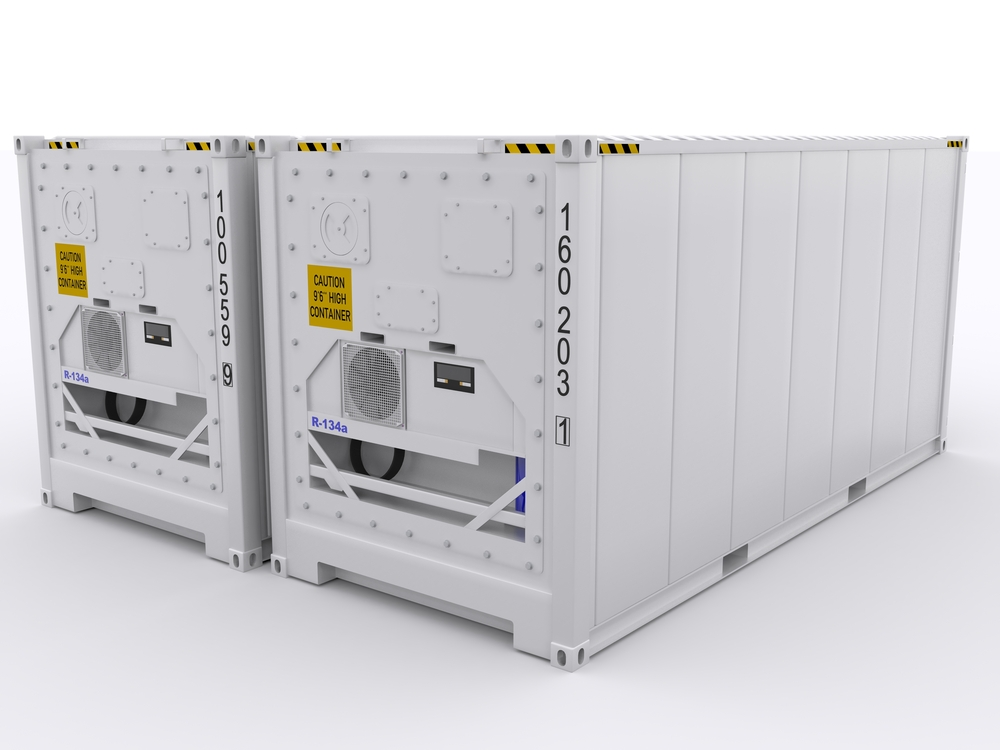
Reefer Containers: These are insulated containers that are used to transport perishable goods such as fruits, vegetables, and pharmaceuticals. They have built-in refrigeration units that keep the cargo at a specific temperature.
Flat Rack Containers: These containers are used to transport oversized cargo such as machinery, vehicles, and construction materials. They have collapsible sides that make loading and unloading easier.
Open Top Containers: These containers are designed to transport goods that are too tall to fit in a standard container. They have a removable roof that allows for top loading.
Tank Containers: These are used to transport liquids and gases such as chemicals, fuels, and food products. They are built with a cylindrical shape and are often used for hazardous materials.
Dry Storage Shipping Containers are your typical standard shipping containers. Basic construction is made of steel, and hermetically sealed, without cooling or ventilation. Sizes typically come in 20 ‘, 40’ or 40 ‘High Cube. The High Cube category facilitates an increase of 13% of the internal cubic capacity and can handle the heaviest loads (coal, tobacco, etc.)
Refrigerated Shipping Container
Reefer Shipping Containers provide a temperature controlled environment. They have a power supply that connects to energy sources during transport. This allows the products to be transported at a constant temperature throughout the journey. They have the possibility to lower temperature from -18 ° to 30 °. There are 20 and 40 foot models, in addition to the High Cube.
This type of Shipping Container is especially recommended for transporting food or products that need a low storage temperature.
Open Top Shipping Container
Open Top Shipping Container have the same measurements as the standard containers, but are open at the top because they have a removable canvas roof. These containers facilitate the transport of bulky loads.
Flat Rack Shipping Container
Flat Rack Shipping Containers are like the Open Top, but also lack side walls and even, in some cases, front and rear walls. They are used for atypical loads and pay supplements in the same way as Open Top.
Open Side Shipping Container
Open Side Shipping Containers have the same measurements as standard containers; 20 or 40 feet, with the difference that they have a side opening. This allows for transporting very long merchandise, whose dimensions prevent it from being loaded by the back door.
Tank Shipping Container
Tank Shipping Containers are used for the liquid transport and made to carry dangerous as toxic, corrosive, highly combustible chemicals, as well as oil, milk, beers, wine, mineral water, etc. They have the same dimensions as a Dry Shipping Containers, but their structure is different, as they include a polyethylene tank inside.
Ventilated Shipping Containers
Ventilated Shipping Containers are made for transporting products such as coffee or cocoa beans, which must be ventilated in transit; sometimes these units are called “coffee containers”.
Shipping Container Door Diagram and Troubleshooting
Now we are going to run through the essential parts of a shipping container.
For a door to work, you need hinges. Pins hold the shipping container’s hinges together through a barrel. In certain cases when doors are difficult to open, hinge pins and blades may be seized due to corrosion. Each door is fitted with 2 to 4 vertical lock rods to enable opening, closing and locking of the doors.
The door handle rotates the lockbar to initiate the door opening process by forcing the cams out of their keepers. Each door handle has a door locking handle retainer that slides over the door handle when in locked position.
At the end of each lock rod is a cam welded in place which engages with knuckles, also known as cam keepers. The action of engaging the cams to the keepers forms an anti-racking function. In certain cases, often unfortunately too many, contents of the shipping container may have shifted causing shipping container doors and lockrods to warp.
When opening a shipping container, start with the right hand door first. Swivel the handles, engage the cams and keepers, and twist both door handles. Closing the doors is just a reverse of this process.
The lock box is a steel box welded to the right hand door which overlaps a staple welded to the left hand door. A padlock, normally CISA type 285 66 can then be attached inside the lock box through the staple and is then protected from direct attack, hindering attempts to gain entry to the container.
ISO markings and a consolidated data plate allow worldwide intermodal transport and are updated as necessary. Take note that customs authorities in some countries may also have their own container seal regulations as part of their national security.
Rubber gaskets are fitted to the container doors during the manufacturing process and prevent water ingress. Door gaskets are designed to present two or more fins against the structure or adjacent door. These are generally flexible but when the gasket is damaged, they may become stiff thus jamming the door closed, or preventing it from being closed.
Doors
Two door leaves are fabricated from two vertical rolled hollow sections and 2 horizontal c section members. The frame is infilled with corrugated steel paneling.
These are normally attached to the rear corner posts each with four drop forged steel hinge blades. The blades allow 270 degree opening which allow the doors to swing back against the container side wall.
(Cargo may shift during transit. Look at the container to make sure that the doors are aligned and level, both top and bottom. In cases where the container frame is racked and the door gear will not operate correctly.)
Lockbox
The lock box is a steel box welded to the right hand door which overlaps a staple welded to the left hand door. A padlock, normally type CISA type 285 66 can then be attached inside the lock box through the staple and is then protected from direct attack, hindering attempts to gain entry to the container.
Lockrods, cam keepers, handles
Each door is fitted with 2-4 vertical lock rods to enable opening, closing and locking of the doors.
At the end of each lock rod (top and bottom) is a cam welded in place which engages with knuckles, also known as cam keepers.
The action of engaging the cams to the keepers forms an anti-racking function.
(In certain cases, often unfortunately too many, contents of the shipping container may have shifted, or containers even dropped, causing shipping container doors and lockrods to warp)
The door handle rotates the lockbar to initiates the door opening process by forcing the cams out of their keepers. Each door handle has a door locking handle retainer that slides over the door handle when in locked position.
Rubber gaskets
Rubber gaskets are fitted to the container doors during the manufacturing process and prevent water ingress.
(Door gaskets are designed to present two or more fins against the structure or adjacent door. These are generally flexible but when the gasket is damaged, they may become hard or blocked thus jamming the door closed, or preventing it being closed.)
ISO markings and CSC plate
ISO markings and a consolidated data plate allow worldwide intermodal transport when left in place and updated as necessary.
Hinge pins
Of course for a door to work, you need hinges.
(In certain cases when doors are difficult to open, hinge pins and blade are seized due to corrosion.)
Choosing the Right Company for Buying a Shipping Container
When doing research in finding the right Shipping Container, follow some of these tips:
Research Online
Choose which companies have a good track record of excellence and reputation. Read reviews and what other customers have to say.
Check for Availability
If you are shipping from various locations, check for availability if containers can be delivered to your required areas.
Check for Best Pricing
If money matters, you can find used container resellers online that might be able to offer half the price on used containers.
Check for Good Customer Service
If you plan to order often, you might want to check for good customer service. Ask potential container companies a question through email or their online customer service. See how fast they respond.
Check for Warranty
Check with companies to see if they offer any warranties or buy back or trade in plans.
There are millions of Shipping Containers in use around the world, and a lucky few get a second life as repurposed shipping container structures. While they look a bit plain and boxy to the untrained eye, shipping containers play a critical role in our lives, whether embarking on ocean crossings to deliver the goods we use every day or venturing into a second life as a container structure.
Here are Some Fascinating Facts about Shipping Containers
Shipping Containers can be safely stacked nine-high.
Well-maintained Shipping Containers hold 759, of their original value for 25+ years.
There are over 37 million Shipping Containers in use around the world.
A Shipping Container floor can hold up 55,000 lb. of goods without warping.
Shipping Container flooring is made of 1-1/8” marine grade plywood.
Most Shipping Containers are 20 feet or 40-feet long.
Shipping Containers are made of 16-gauge corten steel.
Common container modifications include: personnel doors, windows flooring, shelving, work stations, insulation, climate control & even restrooms.
Fun Ways to Use Shipping Containers
Shipping Containers are not just used for cargo these days. There are many innovative and imaginative uses you may like to consider.
Here are few ideas of how shipping containers have been used for modern, cost effective buildings.
Homes
The trend to build cost-effective homes from recycled shipping containers started in USA and has reached Australia.
Art Galleries
Architect, Tomokaza Hayakawa designed an art gallery in Japan using two shipping containers stacked on each other.
Drive-Thru Coffee
Starbucks in Washington have used four old shipping containers to create an architect designed drive-thru store.
Cafes
A cafe in Footscray (Melbourne) called Rudimentary has been built using three 40-foot shipping containers.
Polar Stations
India has built a Polar Station in Antarctica using 134 shipping containers. They cover three floors and are well insulated for the weather conditions.
A well-maintained Shipping Container can hold 75% of their original value for 25+ years. Every day, container ships transport goods all over the world on the international seas.
Shipping Container Opening and Closing Tool
Shipping containers often take a beating, traveling around the world, being exposed to freezing conditions and rust due to seawater or when the frost has melted.
During the cold season, and in freezing parts of the world, our shipping container tool can benefit the opening and closing of frozen shipping container doors and hard to open or rusted containers.
Injuries often occur as a result of personnel trying to open and close difficult container doors, and often are the result of inappropriate techniques being used to open them.
To aid in opening and closing shipping container doors, we introduce OPNBar.
A Shipping Container (also known as Intermodal Container, ISO Container,Railroad Container, and certain Truck Trailers) is a large standardized shipping container, designed and built for intermodal freight transport. Shipping Containers can be used across different modes of transport. They can go from ship to rail to truck, without unloading and reloading their cargo.
The metal doors on the shipping containers on these containers are standardized. Shipping Containers use the same type and style of doors and locking bars, which our tool can be used.
Lengths are as follows: 20′, 40′, 45′, 48′, 50′, 53′. All these containers are globally used to transport cargo. The 53′ length is now, the new the standard length.
Doors and lockrods may warp or container frame is racked so that the door gear will not operate correctly. This may be caused by cargo shifting during transit. Look at the container to make sure that the doors are aligned and level, both top and bottom.
The hinge pins and blade are seized due to corrosion.
The door gasket has been damaged and is preventing opening. Door gaskets are designed to present two or more fins against the structure or adjacent door. These are generally flexible but when the gasket is damaged, they may become hard or blocked thus jamming the door closed, or preventing it being closed.
Water has become trapped between frozen shipping container doors, particularly relevant to refrigerated cargoes, or containers with moisture releasing cargoes in cold weather.
We call you to realize the boundless and infinite advantages and health benefits that Replenish 360’s IV Hydration Therapy & Wellness Services (R360) has available for you! Through our exclusive and one-of-a-kind IV drip and wellness treatments, you can discover treatments to support and relieve the symptoms of an array of complaints and conditions that include:
Migraines
Fatigue
Dehydration
Immunity Boost
Assistance with Weight Loss
Athletic Activity, Recovery & Preparation
Anti-aging
Hangover Recovery
Altitude Sickness
Seasonal Allergies
Sun Exposure
WHY USE REPLENISH 360’S IV HYDRATION THERAPY AND WELLNESS SERVICES?
Our special mixtures of vitamins, minerals, amino acids, and IV fluids are infused directly into the bloodstream via intravenous access, providing your cells a quick way for these nutrients to heal and nourish your body, spirit and soul.
As the bioavailability and absorption is lost at a rate of almost 80% once you take oral or by mouth treatments, our magnificent and healthy infusions will help you retain the treatments in an effective, safe and best method for your overall health and wellness goals and needs In order for nutrients to reach the cell and work effectively, they must be absorbed.
Although a multitude amount of people actually suffer from deficiencies in vitamins and/or have absorption issues, Replenish 360 will be one of your solutions to rectify these conditions so that you meet your nutritional balance and health significantly.
REPLENISH 360’S IV HYDRATION THERAPY & WELLNESS SERVICE BENEFITS
Medically supervised facility
Comfortable environment
Long lasting results
No preservatives or additives
Most IVs take just 30-60 minutes
TREATMENTS WE OFFER
At Replenish 360, our expert, well trained and medically licensed team and workforce will provide you a complete evaluation prior to your IV drip and wellness service. Our excellent and magnificent infusions are specially formulated with rich vitamins, minerals, antioxidants and/or amino acids which will noticeably intensify your energy, enhance your immune system, lessen your inflammation, encourage your muscle recovery and even revive you back from an extreme hangover.
Energizing Rehydration
For your much needed pick-me-up, we have our saline-based blends of B-vitamins, minerals and antioxidants
Supplementing Your Athletic Performance
To aid in your recovery, rest and athletic goals, our complementary IV drips have the fluid hydrations and nutrients to increase your performance and peak.
Beauty and Anti-Aging
Looking youthful in your own way by our first-rate IV hydration and wellness services is possible with our rejuvenating treatments that can complement your beauty and anti-aging needs.
Hangover Heaven and Revival
Our sustaining and nourishing IV drips have the indispensable combinations of fluid hydration and ingredients that can be utilize as your way of detoxification and rebirth that your body needs after a major hangover to restore you back to your peak and spirited self.
For More Information About see this video:
Weight Loss Goals
By passing the gut and gastrointestinal system, our IV hydration therapy may harness your weight loss objectives by efficiently providing you the fluids, electrolytes, vitamins and other ingredients to maintain and accelerate your ambitions.
Immunity to Fight Infections and Inflammation
Our Phoenix Immune Booster has a higher dose of Vitamin C that can help with fighting infections and detoxification to make you feeling a lot better in no time.
The Myers’ Cocktail
Our modified Myer’s cocktail in our Vitamin Recharge has the B-vitamins, Vitamin C, Vitamin A, Vitamin D, Vitamin E, Vitamin K, minerals, electrolytes and other constituents to support and encourage you in every way to alleviate multiple medical ailments such as mental health disorders, reactive airway disease, headaches and migraines, exhaustion, muscle spasms, allergies and more.
Post Flying Jet-lag
Whether it is a short distance or across the country, traveling can put a toll on your body, soul, mind and spirit that may potentially expose you to more weariness, lethargy, irritability, dehydration and lower than usual in your immune system. Our IV Hydration Therapy and Wellness Services can regain your vitality and vigor to keep your in tip-top shape.
Membership Program: Executive and Premier
At Replenish 360, we want you to take advantage of all of the benefits of an IV vitamin drip with the convenience of saving money and time so that you can live your life the way you intended it to be by being consistent throughout the weeks to get rejuvenated and replenished. Join our membership program now!
Replenish 360 IV Hydration Therapy
Replenishing your mind and body, restoring you to your best self, and improving your health and everyday performance.
Replenish 360 offers one of the most affordable wellness and preventative services that are personalized and one of the most activating one-of-a-kind IV drip and infusions, vitamin and antioxidant supplementation, micronutrient therapy, and other additional supplementary wellness services to “renew your body, refresh your mind, and restore performance.”
Our popular flagship Replenish 360 Palm Desert, California office is now available at your convenience for your IV hydration therapy, vitamin supplementation, and other wellness services close by the nearby cities of Palm Springs, Cathedral City, Rancho Mirage, Indian Wells, Indio, Desert Hot Springs, Idyllwild-Pine Cove, Coachella, Bermuda Dunes, La Quinta, Sun City, Thousand Palms, Redlands, Morongo Valley, Cabazon, Banning, Beaumont, Yucaipa, San Jacinto, Hemet, Temecula, Twentynine Palms, Yucca Valley, Big Bear Lake, Joshua Tree, Salton Sea, Brawley, El Centro, Blythe, Calexico, Borrego Springs, and Anza!
IV Hydration Treatment – The Most ideal Way to Beat Parchedness
In the event that you frequently whine of migraine, heaving sensation, stomach torment, or related distress, you might have parchedness. In minor cases, you might defeat drying out by drinking water and other fundamental liquids. Notwithstanding, on the off chance that you have an extreme type of drying out, you need to go through intravenous treatment accessible at Coachella IV Hydration habitats.
Outline of Intravenous Liquid Hydration
Medical care specialists engaged with IV Hydration Therapy Near Me Treatment embed a needle in the arm of a patient or follow an intravenous line. Afterward, the medical caretaker will infuse the rehydrating liquids into the intravenous line to straightforwardly course in the circulation system of the patient.
REPLENISH 360, A DIVISION OF PDRE LLC
Phone: (760) 422-3114
Email: replenish360ivtherapy@gmail.com
Address: 73700 Dinah Shore Dr. Suite 107, Palm Desert, CA 92211
Great centers and medical clinics, including Recharge 360 utilize intravenous hydration to allow the liquids to enter your circulatory system straightforwardly bypassing the stand by time while drinking liquids. Coachella IV Trickles frequently incorporate electrolytes to help the recuperation time frame and recharge the liquid stockpile in the patient’s body.
At the point when You Require IV Treatment
IV Treatment is recommendable when you have serious lack of hydration. For example, many individuals experience liquid misfortune in their bodies on account of influenza disease, heaving, and the runs. In the event that an individual has an extreme sort of drying out, rehydrating by means of intravenous technique is protected than the admission of a lot of liquids.
Other than that, gentle lack of hydration might prompt an expansion in the craving to hydrate, cerebral pains, exhaustion, and sickness. Assuming that the lack of hydration condition turns out to be most horrendously awful, the individual might become oblivious. Thus, you need to monitor how much liquid you consumption in your body in a day.
Claims to fame of Focuses Offering IV Trickles
Laid out and Well-informed Administrations
Each presumed focus offering IV dribbles has laid out and well-informed items and administration contributions. The middle likewise has an accomplished supervisory crew, qualified individuals, and master experts. Every individual has different practitioner trainings skilled to cook hydration necessities. In view of huge experience, experts may likewise persuade patients to deliver their best as could really be expected.
Offer Strengthening Items
Other than IV Treatment Close to Me and intravenous dribbles, patients get advantageous items at rumored focuses. These incorporate nutrients, minerals, cell reinforcements, and other fundamental recuperation drinks. Every one of the enhancements is effectively available under wellbeing and hydration conveniences.
Month to month Participation with Hydration Administrations
Recharge 360 and its experts offer month to month enrollment with comprehensive hydration administrations. The middle additionally has subordinate health administrations to convey rub treatment, nourishment treatment, individual preparation, needle therapy, conduct treatment, wellbeing procedures, and way of life adjustment.
Who Needs IV Treatment
Everybody might go through IV Hydration treatment in their life. Notwithstanding, a couple of gatherings find support from this sort of drying out treatment. These incorporate the accompanying
Older Patients
Older patients as a rule experience a lot of lack of hydration grown-ups. There are many purposes behind drying out in grown-ups. These incorporate diminished kidney capabilities, results of drugs, and inability to allow the fundamental liquids in view of a decrease in memory capabilities.
Constantly Sick Patients.
IV Implantation Treatment is fundamental for constantly sick patients. Constant infections some of the time forestall individuals to drink or eat all alone. Fortunately, IV liquids rehydrate people ideal and assist them with defeating their ailment.
Accordingly, IV treatment given by means of the circulation system assists patients with beating parchedness and disease to help their general wellbeing.
What Is CPR and Why Should I Learn It at Palm Desert Resuscitation Education (PDRE)?
It’s literally either a life-or-death situation that could save someone you love.
You can help save a life by performing cardiopulmonary resuscitation or cpr to a person without a pulse or is not breathing since it is more common than you think with over a half-million cardiac arrests each year.
You do not have to be a healthcare worker or an emergency responder but by just being a good Samaritan or a bystander, then you can actually perform CPR to double or triple the chance of survival after cardiac arrest.
PDRE helps train you carefully, successfully and assertively, so you’re equipped for the period that matter the most.
CPR Training
Palm Desert Resuscitation Education CPR classes are unique, individualized for targeted learning, evidenced-based, relaxed and enjoyable in every sense of the word for the way you live, and learn. With a myriad of selections available on most weekdays and weekends, plus online, instructor-led and blended learning course formats that engaged your overall didactic and psychomotor skills, you can get the highest quality CPR training you need on your own time, schedule and preferred learning environment. From one-of-a-kind and personalized learning to immersive and stimulating interactive scenarios to honest and focused peer-to-peer learning and instructor-based hands-on skills practice, our first-rated and world-class instruction will give you the necessary skills and utmost confidence to truly perform this life-saving procedure when it’s needed the most, especially in times of an emergency when you least expect it.
Performing CPR
Once you sign up for our excellent, educational and fun certification classes, courses, seminars and continuing education, we will thoroughly and systematically teach you how to treat both pediatric and adult populations as it relates to the proper methods and standard procedures for CPR. This is the chief and vital reason for you to keep up with your up-to-date guidelines and recommendations for CPR and practice them regularly, ideally at least every 2 years to help prevent or mitigate loss of these critical life-saving skills.
We offer group-based, private and mobile in-person and online refresher and initial curriculum with in depth and current materials that can support and sustain your retention in the knowledge and psychomotor abilities and essential qualities you’ve gained through our PDRE programs.
Moreover, we also enrich you with your own access to relevant textbooks, a multitude of resources and a printable list of the basic steps for performing CPR so that you can keep the indispensable information you need at a moments notice.
Find a CPR Certification Class
Looking for CPR Classes, First Aid,BLS, ACLS, and PALS Certification and Recertification Courses in or around Palm Desert, California? You’re probably wondering why would you ever need to take a CPR class? Whether you’re in the medical field, who may need an AHA certification to work in the hospital, clinic, or other healthcare setting; you’re a personal trainer requiring an AHA certification to help physically transform your clients; you’re a lifeguard who might need to resuscitate someone who drowns in the swimming pool; parent who finds their child or infant unresponsive; you’re involved in an unfortunate motor vehicle accident and need to assist a person who is not breathing and/or do not have a pulse; you’re a Good Samaritan who just happens to be in a scene where a person has passed out; or you’re an individual who has no medical training or education whatsoever and want to help an individual you care about, you should know that every year there are approximately 383,000 out of hospital cardiac pulmonary arrest. That’s more than 1,000 a day! This fact alone is enough for anyone to understand that taking a CPR class is indispensable and desirable in any medical emergency that may or may not happen at all. However, with at least 1,000 people per day having a cardiac pulmonary arrest, there’s a small chance that your CPR training can make a significant difference.
You don’t have to be advanced healthcare provider to take an AHA course that teaches you how to call help right away, try to revive someone with chest compressions and/or ventilations and then use an automated external defibrillator (AED) to save someone’s life in cardiac pulmonary arrest. It’s as easy as 1-2-3!
Palm Desert Resuscitation offers CPR, First-Aid classes, BLS, ACLS, and PALS Certification and Recertification Courses, and more, and is among Southern California’s best and frontrunner in American Heart Association (AHA) classroom-based and online education, up-to-date news and information delivery.
We want to advance our mission of promoting healthier lives and assist in reducing the morbidity and mortality of cardiovascular diseases and stroke through evidenced-based learning and professional education as per the most current AHA guidelines and recommendations.
Staffed by a dedicated team of highly qualified professional educators and stellar personnel with diverse and experienced healthcare backgrounds, PDRE offers education and training in AHA courses and/or certification(s) for healthcare professionals, allied health professionals and other non-healthcare providers or novice laypersons.
How Long Does Help Arrive After You Call 911?
Did you actually know that it takes 7-10 minutes for the emergency medical services, paramedics, and/or first responders to come to an emergency situation after calling 911? This means that if someone is having a cardiac pulmonary arrest, his or her heart has stopped beating. It is only common sense that those 7-10 minutes are a critical time that requires you as a rescuer to pump the heart by giving prompt and high-quality chest compressions to prevent the victim from circling down the drain because of decreased cardiac output and organ perfusion. It’s all about blood flow during the first few minutes of cardiac pulmonary arrest…so start pumping the chest! Timing is key!
Where Do All of These Life Saving Facts Come From?
The American Heart Association (AHA) actually conducts more research than any other association in the United States except only for the United States government. The AHA is one of the most research-based and outcome-based organizations in the world and is, by far, one of the most reputable sources for long-term prevention and acute management of cardiovascular diseases and stroke. Thus, as an AHA training site, PDRE is here to promote the most up-to-date AHA guidelines and recommendations to increase the survival rates of persons who have cardiopulmonary arrest and stroke. Because of the fact that the AHA changes their recommendations and guidelines every 5 years, PDRE is always cognizant of the newest updated life saving data and tries to incorporate these recommendations and guidelines in subsequent lectures.
How Do PDRE Instructors Teach the Courses?
Through PowerPoint presentations, video-based learning, practice while watching, and more practice sessions (as needed), the students will be immersed by the most enjoyable AHA course content at PDRE.
What Else Can I Expect When Taking First Aid, BLS, ACLS, and PALS
Certification and Recertification Courses?
The most important course objectives for the majority of our classes
include the following critical concepts: (1) recognizing cardiac arrest; (2) understanding the chain of survival; (3) how to give prompt and high-quality CPR; (4) delivering appropriate ventilations or rescue breathing; (5) and how to use an automated external defibrillator (AED). You can also gain confidence in how to handle in-hospital and out-of-hospital emergency situations, increase knowledge by passing the AHA written test and psychomotor skills evaluation with 100% accuracy, and have appreciation for and become enthusiastic at saving a life!!!





 Supplementing Your Athletic Performance


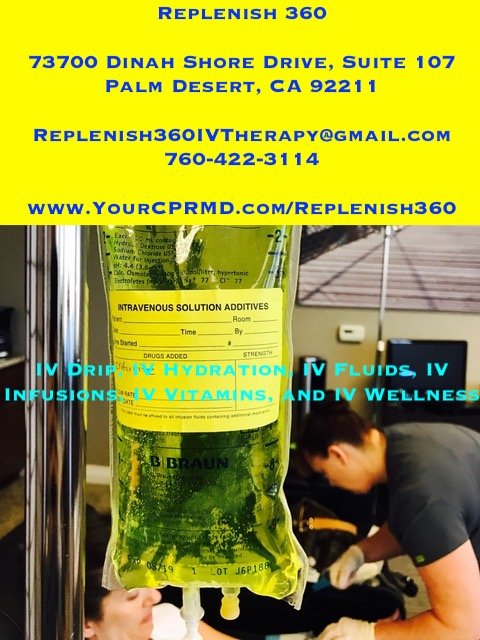


 Replenish 360 IV Hydration Therapy
 Replenish 360 offers one of the most affordable wellness and preventative services that are personalized and one of the most activating one-of-a-kind IV drip and infusions, vitamin and antioxidant supplementation, micronutrient therapy, and other additional supplementary wellness services to “renew your body, refresh your mind, and restore performance.”